
Cleft Ear Deformities in Infants: Understanding Your Treatment Options
Your newborn is beautiful, even though you have noticed that there is a “split” in one or
both of your baby’s ears, as if the ear were torn. This is called a Cleft Ear Deformity.
Although rare, it can be repaired with surgery or by ear molding with EarWell.
What is a Cleft Ear Deformity?
A cleft ear deformity is a congenital abnormality whereby the ear has a split or notch,
often resembling a cleft or gap in the earlobe or the upper part of the ear. It can vary in
severity from a small notch to a complete separation or cleft in the ear structure.
Cleft Ear Deformity Photos
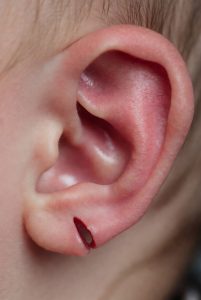
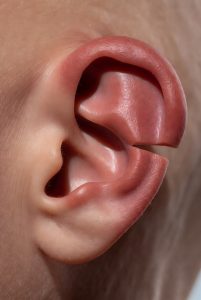
What Causes a Cleft Ear Deformity?
- Congenital factors: It is usually present at birth due to developmental
abnormalities during fetal growth. - Genetic influences: Some cases may be linked to hereditary factors or
syndromes. - Trauma or injury: Though less common, trauma during birth can cause a cleft
ear. - Environmental factors: Exposure to certain drugs or conditions during pregnancy may contribute.
How Common is a Cleft Ear Deformity?
Cleft ear deformity is relatively rare in newborns, occurring in approximately 1 in every
10,000 live births. Although it’s often an isolated deformity, it can also be present in
congenital syndromes or craniofacial abnormalities, such as those listed below.
Syndromes and Craniofacial Abnormalities Associated with Cleft Ear Deformity
- Treacher Collins Syndrome:
A genetic disorder causing craniofacial deformities characterized by underdeveloped cheekbones, jaw, and ear anomalies like cleft ears. - Goldenhar Syndrome (Oculo-Auriculo-Vertebral Spectrum):
Characterized by facial asymmetry, ear malformations (including cleft ears), and
vertebral anomalies. - Pierre Robin Sequence:
Includes micrognathia (small jaw), cleft palate, and sometimes ear deformities. - Nager Syndrome:
A rare disorder causing limb and craniofacial abnormalities including ear clefts. - Other Craniofacial Dysostoses:
Various syndromes involving abnormal development of the skull and facial bones can include ear deformities as part of their presentation.
How Is a Cleft Ear Deformity Treated?
Assuming the baby does not have any of the above diagnoses, there are two options for
repair.
1. Surgical Repair:
Surgery is the most common and effective treatment to reconstruct the ear’s
natural shape by closing the cleft and reshaping the cartilage and skin. This is
usually performed by a plastic surgeon or an otolaryngologist (ENT specialist).
Timing varies, but it can be done in early childhood.
In severe cases where significant ear tissue is missing or malformed, more
complex reconstructive procedures may be needed, sometimes involving grafts
or staged surgeries.
Surgery involves wound care, recovery time, the risk of anesthesia, and
monitoring for any complications.
2. Non-Surgical Repair:
For very minor clefts, some cases might benefit from molding or splinting
techniques soon after birth, such as with EarWell. All of our EarWell physicians
are specifically trained on EarWell and well aware of the options and likelihood of
success with any specific external ear deformity, including cleft ear.
You might be surprised to know how rapidly your little one’s ears can be brought
to a normal appearance without ear surgery, pinning, or discomfort to your baby.
Furthermore, most EarWell treatments are covered by health insurance,
including military insurance and public insurance, such as Medicaid.
We trust that this blog post has been informative. You can visit our EarWell
Physician Page to find a specially trained EarWell physician near you. If you have more
concerns or can’t find one, call us at 630-357-7374. EarWell is our only focus: to enable
all babies to grow up with perfectly beautiful ears!